
Thursday, March 21, 2019

Bank 100% Gains on This Industry's Slowdown

This site uses Akismet to reduce spam. Learn how your comment data is processed.

We've uncovered a trend in stocks the rest of Wall Street is overlooking, and it could double your money if you play it right. We'll show you exactly how with today's trading strategy.

The economy might be slowing down from its peak, and there's no better evidence for it than in the transportation sector.

Last week's release of the February jobs report disappointed in a big way. With a mere 20,000 increase in total nonfarm payrolls, it was much lower than the consensus expectation for 181,000 new jobs. After a long string of jobs successes, this report made investors nervous that economic growth was truly slowing down.

However, for those who paid attention, one critical sector was already slowing down and foreshadowed recent numbers. Friday's report simply proved that it wasn't just a fluke.

The transportation sector is a favorite Wall Street bellwether for the economy – and the stock market by extension. It's also been one of the weakest sectors in the stock market this year.

The forecasting ability of transportation stocks, such as air freight, rails, tankers, and trucking, is no secret. After all, chartists have been following "Dow theory," named after The Wall Street Journal co-founder Charles Dow, for decades. They look for moves in the Dow Jones Industrial Average to be echoed in the Dow Transports. The theory holds that if the companies that make things and the companies that deliver those things are both doing well, then the economy should be doing well, too.

$1 Cash Course: Tom Gentile is offering a rare opportunity to learn how to amass a constant stream of extra cash – year after year. And he's going to teach you how to do it entirely on your own. Learn more…

Unfortunately for the bulls, the late 2018 market sell-off created a Dow theory sell signal that is still in effect today. What that means is the primary direction of the stock market is to the downside, and the rally we've seen since December is just a bounce. It's been a great bounce, but the transport sector suggests it will soon be over.

The good news is that we can still make plenty of money in this type of market. All it requires is creating a bearish strategy, and Money Morning Quantitative Specialist Chris Johnson has one.

His strategy could bag you a 100% gainer by going against this transportation titan while the rest of Wall Street overlooks it…

Double Your Money from the Transportation Slowdown

Just as a bullish strategy often relies on buying the strongest stocks in the strongest sectors, a bearish strategy relies on just the opposite.

That's why we're targeting the transportation sector. As we pointed out, it's been a laggard in the Dow index this year, and its fortunes worsened after the lackluster jobs report.

And to find a prime target in the sector, Johnson turned to his "Best in Breed" screener. His research pinpointed American Airlines Group Inc. (NASDAQ: AAL) as a dud set to drop the most as the economy slows down.

One way to make money off this stock's fall is to simply short it. But the risk here is too high, and we have a smarter play. Shorting a stock exposes an investor to potentially unlimited losses, should the stock move higher.

Rather, we can use stock options to accomplish the same result – but with much lower risk. Buying options risks only the small amount of money invested but has the potential to double your money or more in a short period of time.

American Airlines closed Thursday at $32.13 per share, and Johnson has a price target of $29 for the near term. Given the price and time frame, the AAL April 18, 2019 $32 put (AAL|20190418|32.00C) presents a great opportunity to profit as the stock falls. At $1.25 per option, these puts offer the opportunity to double your money over the next few weeks, as this laggard leads the transportation sector lower. This isn't even factoring in the Boeing Co. (NYSE: BA) scandal that's grounded all 737 Max aircraft. American Airlines owns 24 of them.

This put option contract, which gives the holder the right (but not obligation) to sell 100 shares of AAL stock at $32 per share will cost $125 per 100-share contract, before commissions. If shares of AAL fall to Johnson's target price of $29 before its April 18 expiration, the options price will be $3. This is the difference between the strike price ($32) and stock price ($29).

With the current options price $1.25, that is more than a double. And that's not a bad payday for a month's trade.

But you don't have to stop there. Chris Johnson is leveraging his quantitative research into even more lucrative trades…

Chris Johnson's New Trading System Unveiled

The stock market recently experienced its worst October since 2008.

But since late September, Chris Johnson has delivered a perfect 20-0 record in closed trades with the help of his brand-new Infrared Index.

And it's expected to continue to produce massive profit opportunities, like 157% in total returns in just 24 hours.

In fact, Chris has a new trade opportunity coming out tonight.

Click here to learn how you can take part…

Follow Money Morning on Facebook and Twitter.

Join the conversation. Click here to jump to comments…

Friday, March 15, 2019

Intrinsyc Technologies (ITC) Scheduled to Post Quarterly Earnings on Thursday

Intrinsyc Technologies (TSE:ITC) is set to announce its earnings results before the market opens on Thursday, March 14th.

Shares of ITC opened at C$1.54 on Wednesday. The firm has a market cap of $33.80 million and a PE ratio of 31.43. Intrinsyc Technologies has a 1-year low of C$1.21 and a 1-year high of C$1.75.

Get Intrinsyc Technologies alerts:

ILLEGAL ACTIVITY NOTICE: “Intrinsyc Technologies (ITC) Scheduled to Post Quarterly Earnings on Thursday” was originally published by Ticker Report and is the property of of Ticker Report. If you are viewing this piece on another publication, it was copied illegally and republished in violation of US and international trademark & copyright legislation. The original version of this piece can be read at https://www.tickerreport.com/banking-finance/4216935/intrinsyc-technologies-itc-scheduled-to-post-quarterly-earnings-on-thursday.html.

About Intrinsyc Technologies

Intrinsyc Technologies Corporation provides solutions for the development and production of mobile, embedded, and Internet of Things devices in the United States, the Asia Pacific, Europe, Canada, and internationally. It operates through two segments, Embedded Computing Hardware; and Services and Software.

Featured Story: Return on Investment (ROI) Defined, Explained

Earnings History for Intrinsyc Technologies (TSE:ITC)

Thursday, March 14, 2019

Jubilant Food climbs 3% on block deal; HDFC Sec sees 32% upside

Jubilant Foodworks shares rallied 3 percent intraday on March 14 after a block deal of 40 lakh equity shares in early trade today.

Jubilant Foodworks was quoting at Rs 1,336.00, up Rs 8.70, or 0.66 percent on the BSE, at 1119 hours IST.

A CNBC-TV18 report said about 40 lakh shares (representing a 3 percent of total paid-up equity) exchanged hands at a price of Rs 1,312.40 in early trade.

The company and its subsidiary operate Domino's Pizza brand with the exclusive rights for India, Nepal, Bangladesh and Sri Lanka.

related news HCL Tech falls 2% on a US firm acquisition; analysts mixed Lupin rises 2% despite USFDA concerns for Mandideep unit; brokerages maintain buy

HDFC Securities believes Jubilant Foodworks has enough levers to sustain healthy performance in FY20/21E  given (1)  Return  to  store expansion (focus on splitting stores in metros and expansion in smaller towns), (2) Filling gaps in the   Menu,  (3)  Focus  on  new  customer  acquisition  and  driving frequency,  (4) Benefits from sporting events (Cricket World Cup 2019 and   reschedule   in  IPL  will  support  1HCY19  performance),  (5) Turnaround  of  Dunkin'  and  Launch  of  Hong's  Kitchen.

"We  model 18/11/10 percent same-store-sales growth during FY19E/FY20E/FY21E. We value JFL at 46x on Mar-21 EPS, arriving at a target price  of Rs 1,750. Reiterate buy," the research house said.

Disclaimer: The above report is compiled from information available on public platforms. Moneycontrol advises users to check with certified experts before taking any investment decisions. First Published on Mar 14, 2019 11:42 am

Wednesday, March 13, 2019

Top 10 Energy Stocks For 2019

tags:TSO,SU,MCF,LPI,MTDR,PTR,OXY,NBR,CRT,DRQ,

Energy stocks had a tough 2018, as an initial bounce in crude oil prices gave way to weakness toward the end of the year. Yet 2019 started on a positive footing for the sector, and offshore and land-based drilling services specialist TechnipFMC (NYSE:FTI) saw its stock regain a significant portion of its losses from 2018 during the first couple of months of the year.

Coming into Wednesday's fourth-quarter financial report, TechnipFMC investors hoped that the company would be able to start putting its difficulties behind it by posting strong earnings growth. Instead, a set of massive charges left the company more than $2 billion in the hole, and even after adjusting for those one-time impacts, unexpected red ink left investors feeling shell-shocked.

Image source: TechnipFMC.

What caused TechnipFMC's pain?

TechnipFMC's fourth-quarter financial results didn't live up to expectations. Revenue of $3.32 billion was down 10% from year-ago levels, doing worse than the 8% decline that those following the stock had expected. Net losses amounted to $2.26 billion, and even after taking out one-time items, adjusted net losses of $39 million worked out to $0.09 per share -- disappointing investors who had projected an adjusted profit of $0.37 per share.

Top 10 Energy Stocks For 2019: Tesoro Corporation(TSO)

Advisors' Opinion:
  • [By Peter Graham]

    A long term performance chart shows Valero Energy Corporation along with large cap peers Marathon Petroleum Corp (NYSE: MPC) and Andeavor (NYSE: ANDV), formerly Tesoro Corporation (NYSE: TSO), all giving a similar performance while mid cap Western Refining, Inc (NYSE: WNR) has varied a bit from its peers:

Top 10 Energy Stocks For 2019: Suncor Energy Inc.(SU)

Advisors' Opinion:
  • [By Joseph Griffin]

    Toronto Dominion Bank increased its position in shares of Suncor Energy (NYSE:SU) (TSE:SU) by 30.9% during the first quarter, according to the company in its most recent Form 13F filing with the Securities & Exchange Commission. The firm owned 9,779,382 shares of the oil and gas producer’s stock after acquiring an additional 2,309,941 shares during the period. Suncor Energy makes up about 0.8% of Toronto Dominion Bank’s investment portfolio, making the stock its 11th largest position. Toronto Dominion Bank owned approximately 0.60% of Suncor Energy worth $337,645,000 at the end of the most recent quarter.

  • [By Stephan Byrd]

    JPMorgan Chase & Co. lessened its stake in Suncor Energy Inc. (NYSE:SU) (TSE:SU) by 31.5% during the 1st quarter, according to the company in its most recent 13F filing with the SEC. The firm owned 1,460,586 shares of the oil and gas producer’s stock after selling 670,136 shares during the quarter. JPMorgan Chase & Co.’s holdings in Suncor Energy were worth $50,448,000 at the end of the most recent reporting period.

  • [By Tyler Crowe]

    I don't know if you have noticed, but oil prices have been on the rise lately, which has done miraculous things for the bottom lines at oil and gas companies. The same can be said for Suncor Energy (NYSE:SU), which was able to post a rather healthy earnings per share number considering one of its major oil sands facilities was shut down in the most recent quarter.

  • [By Stephan Byrd]

    Addenda Capital Inc. increased its holdings in shares of Suncor Energy Inc. (NYSE:SU) (TSE:SU) by 97.0% in the second quarter, according to the company in its most recent filing with the SEC. The institutional investor owned 3,121,057 shares of the oil and gas producer’s stock after purchasing an additional 1,536,736 shares during the quarter. Suncor Energy accounts for about 4.4% of Addenda Capital Inc.’s investment portfolio, making the stock its 5th largest holding. Addenda Capital Inc. owned approximately 0.19% of Suncor Energy worth $117,176,000 at the end of the most recent quarter.

  • [By Matthew DiLallo]

    In early June, Suncor Energy (NYSE:SU) put out a press release announcing that it was "set up for strong production for the remainder of the year." Driving Suncor's view was the fact that it finished all the major maintenance projects across its facilities and its recently completed expansion projects were exceeding expectations. 

Top 10 Energy Stocks For 2019: Contango Oil & Gas Company(MCF)

Advisors' Opinion:
  • [By Stephan Byrd]

    COPYRIGHT VIOLATION NOTICE: “Contango Oil & Gas (MCF) Short Interest Update” was originally published by Ticker Report and is owned by of Ticker Report. If you are reading this article on another site, it was copied illegally and republished in violation of US and international copyright & trademark laws. The correct version of this article can be read at https://www.tickerreport.com/banking-finance/3346537/contango-oil-gas-mcf-short-interest-update.html.

  • [By Joseph Griffin]

    Fondren Management LP purchased a new position in shares of Contango Oil & Gas (NYSEAMERICAN:MCF) in the 2nd quarter, according to the company in its most recent filing with the SEC. The institutional investor purchased 60,000 shares of the oil and natural gas company’s stock, valued at approximately $341,000. Fondren Management LP owned 0.23% of Contango Oil & Gas as of its most recent filing with the SEC.

  • [By Joseph Griffin]

    Contango Oil & Gas (NASDAQ:MCF) was downgraded by equities researchers at Seaport Global Securities from a “buy” rating to a “neutral” rating in a research report issued on Friday.

  • [By Ethan Ryder]

    Fmr LLC increased its position in shares of Contango Oil & Gas (NYSEAMERICAN:MCF) by 33.5% during the second quarter, according to the company in its most recent disclosure with the Securities & Exchange Commission. The institutional investor owned 3,583,039 shares of the oil and natural gas company’s stock after buying an additional 899,900 shares during the quarter. Fmr LLC owned 13.93% of Contango Oil & Gas worth $20,352,000 at the end of the most recent quarter.

Top 10 Energy Stocks For 2019: Laredo Petroleum, Inc.(LPI)

Advisors' Opinion:
  • [By Lisa Levin]


    Losers Heat Biologics, Inc. (NASDAQ: HTBX) shares tumbled 48.59 percent to close at $1.275 on Thursday after the company priced its $18,000,000 public offering. InVivo Therapeutics Holdings Corp. (NASDAQ: NVIV) fell 38.77 percent to close at $8.26 on Thursday. Check-Cap Ltd. (NASDAQ: CHEK) shares tumbled 27.43 percent to close at $8.81. Achaogen, Inc. (NASDAQ: AKAO) dropped 24.76 percent to close at $11.06 in reaction to a disappointing update from an FDA AdCom panel. The FDA panel voted favorably for the company's Plazcomicin for treatment of adults with complicated urinary tract infections, but also voted against the therapy to be used as a treatment for bloodstream infections. Anika Therapeutics, Inc. (NASDAQ: ANIK) shares declined 24.68 percent to close at $34.80 after the company posted downbeat quarterly results. LSC Communications, Inc. (NASDAQ: LKSD) shares fell 24.22 percent to close at $12.64 following wider-than-expected Q1 loss. Cardinal Health, Inc. (NYSE: CAH) fell 21.42 percent to close at $50.80 following downbeat quarterly profit. Horizon Global Corporation (NYSE: HZN) dropped 20.42 percent to close at $6.00 following downbeat quarterly earnings. Hornbeck Offshore Services, Inc. (NYSE: HOS) slipped 20.11 percent to close at $2.90 following wider-than-expected Q1 loss. Esperion Therapeutics, Inc. (NASDAQ: ESPR) fell 19.28 percent to close at $36.93. Esperion Therapeutics stock lost roughly a third of its value Wednesday after the company reported mixed Phase III results for its leading drug candidate, bempedoic acid. JP Morgan downgraded Esperion Therapeutics from Neutral to Underweight. Laredo Petroleum, Inc. (NYSE: LPI) declined 17.77 percent to close at $8.98 after the company reported weaker-than-expected Q1 earnings. The Habit Restaurants, Inc. (NASDAQ: HABT) dipped 16.1 percent to close at $8.60 after the company reported downbeat quarterly results. Arcadia Biosciences, Inc. (N
  • [By Shane Hupp]

    Laredo Petroleum Inc (NYSE:LPI) shares dropped 7.9% during mid-day trading on Friday . The stock traded as low as $8.41 and last traded at $8.61. Approximately 5,931,000 shares were traded during mid-day trading, an increase of 68% from the average daily volume of 3,529,008 shares. The stock had previously closed at $9.35.

  • [By Stephan Byrd]

    Get a free copy of the Zacks research report on Laredo Petroleum (LPI)

    For more information about research offerings from Zacks Investment Research, visit Zacks.com

  • [By Matthew DiLallo]

    Oil has continued its remarkable rise this year, rallying another 10%, to more than $65 a barrel in the U.S. That rebound has taken most oil stocks up with it. However, a handful managed to lose ground this year, including Laredo Petroleum (NYSE:LPI), Concho Resources (NYSE:CXO), and Cimarex Energy (NYSE:XEC), which are all down double digits. That sell-off makes them worth a closer look.

  • [By Ethan Ryder]

    These are some of the news headlines that may have effected Accern Sentiment Analysis’s scoring:

    Get Laredo Petroleum alerts: Q2 2018 EPS Estimates for Laredo Petroleum Inc (LPI) Reduced by Analyst (americanbankingnews.com) Laredo Working to Restart Permian Production Shuttered Following Tank Fire (naturalgasintel.com) OPEC Losing Control After Libya Outages (finance.yahoo.com) Laredo Petroleum reaffirms FY 2018 production view after storage tank fire (seekingalpha.com) Laredo Petroleum (LPI) Provides Update on Fire Reported at Tank Battery in Glasscock County, Texas (streetinsider.com)

    LPI stock traded down $0.15 during trading on Thursday, reaching $9.37. 204,560 shares of the stock were exchanged, compared to its average volume of 4,884,005. Laredo Petroleum has a twelve month low of $7.41 and a twelve month high of $13.46. The company has a market cap of $2.24 billion, a PE ratio of 15.62, a price-to-earnings-growth ratio of 1.79 and a beta of 1.16. The company has a quick ratio of 0.77, a current ratio of 0.77 and a debt-to-equity ratio of 0.90.

  • [By Matthew DiLallo]

    Shares of oil producers Laredo Petroleum (NYSE:LPI) and SM Energy (NYSE:SM), as well as units of Golar LNG Partners LP (NASDAQ:GMLP), an MLP that owns liquified natural gas carriers and floating storage and regasification units, all declined by double digits by Friday afternoon. Lower oil prices weighed on the first two, while an analyst downgrade was the culprit in the latter.

Top 10 Energy Stocks For 2019: Matador Resources Company(MTDR)

Advisors' Opinion:
  • [By Logan Wallace]

    Get a free copy of the Zacks research report on Matador Resources (MTDR)

    For more information about research offerings from Zacks Investment Research, visit Zacks.com

  • [By Ethan Ryder]

    Matador Resources Co (NYSE:MTDR) – Stock analysts at Imperial Capital raised their Q3 2018 earnings per share (EPS) estimates for Matador Resources in a report issued on Thursday, October 4th. Imperial Capital analyst I. Haas now anticipates that the energy company will post earnings of $0.43 per share for the quarter, up from their prior forecast of $0.41. Imperial Capital currently has a “Outperform” rating and a $45.00 price objective on the stock. Imperial Capital also issued estimates for Matador Resources’ Q4 2018 earnings at $0.43 EPS, FY2018 earnings at $1.63 EPS, Q1 2019 earnings at $0.41 EPS, Q2 2019 earnings at $0.45 EPS, Q3 2019 earnings at $0.49 EPS, Q4 2019 earnings at $0.60 EPS and FY2019 earnings at $1.96 EPS.

  • [By Stephan Byrd]

    Get a free copy of the Zacks research report on Matador Resources (MTDR)

    For more information about research offerings from Zacks Investment Research, visit Zacks.com

  • [By Ethan Ryder]

    Matador Resources (NYSE: MTDR) and SandRidge Mississippian Trust II (NYSE:SDR) are both oils/energy companies, but which is the superior investment? We will contrast the two businesses based on the strength of their risk, analyst recommendations, institutional ownership, valuation, dividends, earnings and profitability.

Top 10 Energy Stocks For 2019: PetroChina Company Limited(PTR)

Advisors' Opinion:
  • [By Ethan Ryder]

    These are some of the news stories that may have effected Accern Sentiment’s analysis:

    Get PetroChina alerts: PetroChina Company Limited (PTR) Receives Consensus Rating of “Buy” from Analysts (americanbankingnews.com) PetroChina to spend 5.3 bln yuan on Chongqing gas storage: Xinhua (reuters.com) UPDATE: Bernstein Upgrades Petrochina (PTR) to Outperform (streetinsider.com) Kunlun Energy Company Limited — Moody’s changes Kunlun Energy’s outlook to stable from negative (finance.yahoo.com) PetroChina (PTR) Upgraded at Sanford C. Bernstein (americanbankingnews.com)

    Shares of PetroChina traded down $0.85, reaching $82.35, during midday trading on Friday, Marketbeat Ratings reports. The company had a trading volume of 165,409 shares, compared to its average volume of 150,236. The company has a market capitalization of $152.09 billion, a P/E ratio of 46.26 and a beta of 1.43. PetroChina has a 52-week low of $60.69 and a 52-week high of $84.10. The company has a debt-to-equity ratio of 0.22, a quick ratio of 0.55 and a current ratio of 0.82.

  • [By Paul Ausick]

    But the Cupertino behemoth won’t be the first publicly traded company to reach that valuation. More than 10 years ago, China’s state-controlled oil giant PetroChina Co. Ltd. (NYSE: PTR) posted a market cap of $1.005 trillion on the day of its initial public offering in Shanghai. The class A shares went out at 16.7 yuan, and the stock nearly tripled on its first day of trading to 43.96 yuan. At the time it took about 7.5 yuan to equal one U.S. dollar.

  • [By Logan Wallace]

    Here are some of the media stories that may have effected Accern Sentiment’s rankings:

    Get PetroChina alerts: PetroChina Continues to Increase its Reserves and Output of Oil and Gas Net Profit for the First Half of 2018 Increased 113.7% Year-on-Year (webwire.com) PetroChina Company Limited (PTR) Announces Special Dividend of $0.32 (americanbankingnews.com) China's Natural Gas Imports Soar Despite Domestic Output Growth (finance.yahoo.com) China state oil firms clash over ownership rights – Global Times (finance.yahoo.com) China Oil Companies Report Strong First-Half Profits (caixinglobal.com)

    PTR opened at $73.10 on Friday. The company has a market cap of $135.55 billion, a PE ratio of 41.07 and a beta of 1.44. PetroChina has a 52-week low of $61.87 and a 52-week high of $85.02. The company has a debt-to-equity ratio of 0.20, a quick ratio of 0.55 and a current ratio of 0.82.

  • [By Todd Campbell]

    The following table highlights the 10 biggest energy companies by market capitalization. Some of these companies operate upstream, midstream, and downstream businesses, but all of them derive the majority of their revenue from upstream operations.

    Rank Company Market Cap 1 ExxonMobil $348 billion 2 Royal Dutch Shell (NYSE:RDS-A)(NYSE:RDS-B) $286 billion 3 Chevron (NYSE:CVX) $223 billion 4 Petrochina Co. Ltd. (NYSE:PTR) $218 billion 5 Total SA (NYSE:TOT) $163 billion 6 BP Plc (NYSE:BP) $143 billion 7 China Petroleum (NYSE:SNP) $107 billion 8 Equinor ASA (NYSE:EQNR) $89 billion 9 ConocoPhillips (NYSE:COP) $84 billion 10 Schlumberger Ltd. (NYSE:SLB) $84 billion

    Data source: Yahoo! Finance on Sept. 13, 2018.

Top 10 Energy Stocks For 2019: Occidental Petroleum Corporation(OXY)

Advisors' Opinion:
  • [By Chris Lange]

    Occidental Petroleum Corp.'s (NYSE: OXY) short interest decreased to 8.60 million shares from the previous reading of 8.98 million. Shares recently traded at $83.69, in a 52-week range of $57.84 to $87.67.

  • [By Matthew DiLallo]

    Pioneer Natural Resources (NYSE:PXD) and Occidental Petroleum (NYSE:OXY) are also reducing spending in 2019. In the case of Pioneer Natural Resources, it's budgeting $2.8 billion to $3.1 billion in capital for the coming year, which is below 2018's level of $3.64 billion. Occidental Petroleum, meanwhile, is cutting its budget by 10% for 2019. Those spending cuts will enable both Pioneer and Occidental to generate free cash flow at the current oil price point, giving them both more money to return to investors.  

  • [By Motley Fool Transcribers]

    Occidental Petroleum Corp  (NYSE:OXY)Q4 2018 Earnings Conference CallFeb. 13, 2019, 12:00 p.m. ET

    Contents: Prepared Remarks Questions and Answers Call Participants Prepared Remarks:

    Operator

Top 10 Energy Stocks For 2019: Nabors Industries Ltd.(NBR)

Advisors' Opinion:
  • [By Logan Wallace]

    The Manufacturers Life Insurance Company cut its position in Nabors Industries Ltd. (NYSE:NBR) by 4.3% during the 1st quarter, according to the company in its most recent filing with the Securities & Exchange Commission. The fund owned 503,407 shares of the oil and gas company’s stock after selling 22,507 shares during the quarter. The Manufacturers Life Insurance Company owned about 0.16% of Nabors Industries worth $3,519,000 at the end of the most recent quarter.

  • [By Ethan Ryder]

    Nabors Industries (NYSE:NBR) received a $8.00 price objective from research analysts at Piper Jaffray Companies in a research note issued to investors on Wednesday. The firm currently has a “hold” rating on the oil and gas company’s stock. Piper Jaffray Companies’ price target points to a potential upside of 27.59% from the stock’s previous close.

  • [By Logan Wallace]

    Niobio Cash (CURRENCY:NBR) traded 16.4% higher against the dollar during the twenty-four hour period ending at 20:00 PM ET on August 16th. Niobio Cash has a market cap of $195,546.00 and $370.00 worth of Niobio Cash was traded on exchanges in the last 24 hours. One Niobio Cash coin can currently be bought for approximately $0.0018 or 0.00000029 BTC on major cryptocurrency exchanges including Crex24 and TradeOgre. During the last week, Niobio Cash has traded 2.2% higher against the dollar.

  • [By Logan Wallace]

    Nabors Industries Ltd. (NYSE:NBR) gapped up prior to trading on Thursday . The stock had previously closed at $6.13, but opened at $6.27. Nabors Industries shares last traded at $6.29, with a volume of 6673544 shares changing hands.

Top 10 Energy Stocks For 2019: Cross Timbers Royalty Trust(CRT)

Advisors' Opinion:
  • [By Ethan Ryder]

    News stories about Cross Timbers Royalty Trust (NYSE:CRT) have been trending somewhat positive recently, according to Accern Sentiment Analysis. The research firm ranks the sentiment of press coverage by reviewing more than 20 million news and blog sources in real-time. Accern ranks coverage of publicly-traded companies on a scale of negative one to positive one, with scores closest to one being the most favorable. Cross Timbers Royalty Trust earned a media sentiment score of 0.23 on Accern’s scale. Accern also assigned headlines about the oil and gas company an impact score of 47.0297657024049 out of 100, indicating that recent press coverage is somewhat unlikely to have an impact on the company’s share price in the near term.

  • [By Ethan Ryder]

    Cross Timbers Royalty Trust (NYSE:CRT) announced a dividend on Tuesday, August 21st, NASDAQ reports. Stockholders of record on Friday, August 31st will be paid a dividend of 0.108 per share by the oil and gas company on Monday, September 17th. The ex-dividend date of this dividend is Thursday, August 30th.

Top 10 Energy Stocks For 2019: Dril-Quip, Inc.(DRQ)

Advisors' Opinion:
  • [By Jon C. Ogg]

    Dril-Quip Inc. (NYSE: DRQ) was started with an Underweight rating and assigned a target price of $50 (versus a $49.80 close, after a 1.5% gain). The shares were last seen down five cents at $49.75, in a 52-week range of $37.35 and with a consensus target price of $45.13.

  • [By Shane Hupp]

    Solaris Oilfield Infrastructure (NYSE: SOI) and Dril-Quip (NYSE:DRQ) are both small-cap oils/energy companies, but which is the superior business? We will contrast the two businesses based on the strength of their dividends, earnings, profitability, institutional ownership, analyst recommendations, valuation and risk.

  • [By Logan Wallace]

    Get a free copy of the Zacks research report on Dril-Quip (DRQ)

    For more information about research offerings from Zacks Investment Research, visit Zacks.com

  • [By Stephan Byrd]

    Dril-Quip (NYSE: DRQ) is one of 14 public companies in the “Oil & gas field machinery” industry, but how does it contrast to its competitors? We will compare Dril-Quip to related companies based on the strength of its risk, valuation, analyst recommendations, profitability, dividends, institutional ownership and earnings.

Monday, March 11, 2019

7 St. Patrick’s Day Traditions to Celebrate in 2019

What are some of your favorite St. Patrick’s Day traditions?

St. Patrick's Day TraditionsSt. Patrick's Day Traditions Source: Flickr

We are only nine days away from the big Irish Catholic holiday, which falls on March 17 this year, landing on a Sunday this time around. Here are seven traditions of the holiday you should know about:

Green River: Perhaps the best known of the St. Patrick’s Day traditions that take place in the U.S. every year is in Chicago as they turn the iconic Chicago River green during the holiday. Shamrock: Everyone who knows about St. Patty’s has seen or heard of the shamrock, which was a sacred plant in ancient Ireland as it brought forth the return of spring. It has since become a sign of Irish pride. Snake: The snake is another big one as St. Patrick reportedly stood on a hilltop when he went to Ireland and banished every snake from Ireland with a wooden staff. Traditional Fare: Corned beef and cabbage are the main foods that people eat in Ireland during the holiday, with the former arriving at the turn of the century, while cabbage has been around for ages. Parades: Across the U.S., there are plenty of St. Patrick’s Day parades in cities such as Chicago, Boston, New York City and Philadelphia. Leprechauns: Ah yes, leprechauns are an iconic part of the holiday, representing water spirits with a cunning spirit. Beer: Naturally, there will be a lot of Guinness being passed out during the day. Compare Brokers

Sunday, March 10, 2019

Hot Casino Stocks To Own Right Now

tags:ENR,CFFN,CHMI,

Gaming companies aren't differentiated by the table games they offer, what slot machines they have, or even what comps they give to players. If you think about it, casino games themselves are pretty similar whether you're in Iowa or Macau. 

What differentiates gaming companies today are the resorts they build and where those resorts are located. Put a megaresort on the desolate north end of the Las Vegas Strip, and you might go bankrupt before it's completed (see Echelon, Las Vegas Plaza, and Fontainebleau), but if you're building a multi-billion dollar resort in Macau or Singapore, it's almost impossible to lose money. No company has better locations than Las Vegas Sands (NYSE:LVS), which is why it's one of the most profitable companies in gaming. Here's where the company's money comes from. 

Image source: Las Vegas Sands.

Where Las Vegas Sands' cash comes from

Revenue isn't a great way to measure a gaming company's success, so investors should look at the cash flow coming from gaming resorts. The best measure of cash flow for a gaming company is property EBITDA, or earnings before interest, taxes, depreciation, and amortization. The biggest investment a gaming company makes is building the resort itself, so once the resort is built, it's appropriate to measure ongoing cash flow, something EBITDA does better than net income. 

Hot Casino Stocks To Own Right Now: Energizer Holdings, Inc.(ENR)

Advisors' Opinion:
  • [By Logan Wallace]

    Get a free copy of the Zacks research report on Energizer (ENR)

    For more information about research offerings from Zacks Investment Research, visit Zacks.com

  • [By Stephan Byrd]

    Great West Life Assurance Co. Can increased its position in shares of Energizer Holdings Inc (NYSE:ENR) by 2.1% during the 2nd quarter, HoldingsChannel.com reports. The fund owned 209,651 shares of the company’s stock after purchasing an additional 4,282 shares during the quarter. Great West Life Assurance Co. Can’s holdings in Energizer were worth $13,209,000 at the end of the most recent quarter.

  • [By Stephan Byrd]

    Oppenheimer Asset Management Inc. grew its position in Energizer Holdings Inc (NYSE:ENR) by 18.4% during the second quarter, according to the company in its most recent disclosure with the Securities & Exchange Commission. The firm owned 5,742 shares of the company’s stock after purchasing an additional 894 shares during the quarter. Oppenheimer Asset Management Inc.’s holdings in Energizer were worth $362,000 as of its most recent SEC filing.

  • [By Stephan Byrd]

    Zacks Investment Management decreased its position in Energizer Holdings Inc (NYSE:ENR) by 43.9% in the 2nd quarter, according to the company in its most recent filing with the Securities and Exchange Commission. The institutional investor owned 14,753 shares of the company’s stock after selling 11,549 shares during the quarter. Zacks Investment Management’s holdings in Energizer were worth $929,000 as of its most recent SEC filing.

  • [By Lisa Levin] Gainers SenesTech, Inc. (NASDAQ: SNES) shares surged 296.07 percent to close at $1.25 on Monday after the California Department of Pesticide Regulation proposed to register the company's ContraPest for sale and use in California. AgEagle Aerial Systems, Inc. (NASDAQ: UAVS) shares gained 19.59 percent to close at $2.93. TransGlobe Energy Corporation (NASDAQ: TGA) rose 18.39 percent to close at $2.64 on Monday. Sears Hometown and Outlet Stores, Inc. (NASDAQ: SHOS) shares gained 15.91 percent to close at $2.55. VAALCO Energy, Inc. (NYSE: EGY) shares jumped 14.9 percent to close at $2.39. Resonant Inc. (NASDAQ: RESN) climbed 13.96 percent to close at $4.49. Chesapeake Energy Corporation (NYSE: CHK) shares rose 13.55 percent to close at $4.61 on Monday. Lilis Energy, Inc. (NYSE: LLEX) surged 13.09 percent to close at $5.01. MB Financial, Inc. (NASDAQ: MBFI) gained 12.9 percent to close at $49.28. Fifth Third Bancorp (NASDAQ: FITB) agreed to acquire MB Financial for $54.70 per share in cash and stock. TransEnterix, Inc. (NYSE: TRXC) shares rose 12.83 percent to close at $3.43. World Wrestling Entertainment, Inc. (NYSE: WWE) jumped 12.52 percent to close at $57.86 on Reports that it has reached a deal with Fox for Its 'Smackdown Live' program. Eastman Kodak Company (NASDAQ: KODK) rose 12.38 percent to close at $5.90. NuCana plc (NASDAQ: NCNA) climbed 11.94 percent to close at $26.44. NuCana appointed Dr. Cyrille Leperlier to its Board as an independent non-executive Director. Aqua Metals, Inc. (NASDAQ: AQMS) rose 11.83 percent to close at $3.97 on Monday. Huami Corporation (NYSE: HMI) shares jumped 11.27 percent to close at $10.17 following Q1 results. 21Vianet Group, Inc. (NASDAQ: VNET) gained 9.55 percent to close at $7.34. Boxlight Corporation (NASDAQ: BOXL) rose 8.56 percent to close at $7.86 after the company announced an exclusive partnership with Multi Touch Interactives to strengthen the de
  • [By Lisa Levin] Gainers SenesTech, Inc. (NASDAQ: SNES) shares jumped 113.5 percent to $0.6737 after the California Department of Pesticide Regulation proposed to register the company's ContraPest for sale and use in California. AgEagle Aerial Systems, Inc. (NASDAQ: UAVS) shares rose 35.34 percent to close at $3.32. Art's-Way Manufacturing Co., Inc. (NASDAQ: ARTW) shares gained 30.36 percent to $3.65. Xtant Medical Holdings, Inc. (NYSE: XTNT) shares jumped 25.6 percent to $7.4701 after the company disclosed that it has received the FDA clearance for InTice™-C Porous Titanium Cervical Interbody System. VAALCO Energy, Inc. (NYSE: EGY) shares surged 20 percent to $2.495. TransGlobe Energy Corporation (NASDAQ: TGA) surged 17.04 percent to $2.61. Boxlight Corporation (NASDAQ: BOXL) gained 15 percent to $8.32 after the company announced an exclusive partnership with Multi Touch Interactives to strengthen the development of next generation interactive educational activities. Arcimoto, Inc. (NASDAQ: FUV) gained 15 percent to $3.39. MB Financial, Inc. (NASDAQ: MBFI) rose 13.7 percent to $49.64. Fifth Third Bancorp (NASDAQ: FITB) agreed to acquire MB Financial for $54.70 per share in cash and stock. FRONTEO, Inc. (NASDAQ: FTEO) shares rose 11.8 percent to $20.956. TransEnterix, Inc. (NYSE: TRXC) shares jumped 11.1 percent to $3.38. 21Vianet Group, Inc. (NASDAQ: VNET) rose 10.6 percent to $7.41. NII Holdings, Inc. (NASDAQ: NIHD) shares gained 9 percent to $2.32. Kelly Services, Inc. (NASDAQ: KELYA) rose 7.6 percent to $24.19. Northcoast Research upgraded Kelly Services from Neutral to Buy. LaSalle Hotel Properties (NYSE: LHO) shares climbed 5.6 percent to $33.70. Blackstone Group LP (NYSE: BX) will buy LaSalle Hotel Properties in a $4.8 billion deal, Bloomberg reported. Alteryx, Inc. (NYSE: AYX) gained 5.5 percent to $32.56. KeyBanc upgraded Alteryx from Sector Weight to Overweight. Energizer Holdings, Inc. (NYSE:

Hot Casino Stocks To Own Right Now: Capitol Federal Financial(CFFN)

Advisors' Opinion:
  • [By Stephan Byrd]

    News headlines about Capitol Federal Financial (NASDAQ:CFFN) have trended positive on Thursday, according to Accern Sentiment Analysis. The research firm ranks the sentiment of media coverage by monitoring more than 20 million news and blog sources. Accern ranks coverage of publicly-traded companies on a scale of negative one to positive one, with scores nearest to one being the most favorable. Capitol Federal Financial earned a media sentiment score of 0.31 on Accern’s scale. Accern also assigned news coverage about the savings and loans company an impact score of 47.2593540313148 out of 100, indicating that recent media coverage is somewhat unlikely to have an impact on the stock’s share price in the near term.

  • [By Joseph Griffin]

    BankUnited (NYSE: BKU) and Capitol Federal Financial (NASDAQ:CFFN) are both finance companies, but which is the better stock? We will compare the two businesses based on the strength of their risk, earnings, valuation, profitability, dividends, institutional ownership and analyst recommendations.

  • [By Max Byerly]

    Dean Capital Investments Management LLC bought a new stake in Capitol Federal Financial, Inc. (NASDAQ:CFFN) in the 2nd quarter, according to its most recent filing with the Securities & Exchange Commission. The institutional investor bought 42,438 shares of the savings and loans company’s stock, valued at approximately $558,000.

  • [By Joseph Griffin]

    People’s United Financial (NASDAQ: PBCT) and Capitol Federal Financial (NASDAQ:CFFN) are both finance companies, but which is the superior stock? We will compare the two companies based on the strength of their earnings, analyst recommendations, institutional ownership, risk, valuation, profitability and dividends.

  • [By Stephan Byrd]

    Capitol Federal Financial (NASDAQ: CFFN) and Northrim BanCorp (NASDAQ:NRIM) are both small-cap finance companies, but which is the superior business? We will contrast the two businesses based on the strength of their analyst recommendations, institutional ownership, risk, earnings, profitability, valuation and dividends.

Hot Casino Stocks To Own Right Now: Cherry Hill Mortgage Investment Corporation(CHMI)

Advisors' Opinion:
  • [By Max Byerly]

    Cherry Hill Mortgage Investment (NYSE:CHMI) and Great Portland Estates (OTCMKTS:GPEAF) are both finance companies, but which is the better business? We will compare the two businesses based on the strength of their risk, analyst recommendations, earnings, dividends, profitability, institutional ownership and valuation.

  • [By Stephan Byrd]

    Welltower (NYSE: WELL) and Cherry Hill Mortgage Investment (NYSE:CHMI) are both finance companies, but which is the superior stock? We will contrast the two companies based on the strength of their valuation, analyst recommendations, earnings, institutional ownership, profitability, risk and dividends.

  • [By Ethan Ryder]

    Connor Clark & Lunn Investment Management Ltd. acquired a new stake in shares of Cherry Hill Mortgage Investment Corp (NYSE:CHMI) during the 2nd quarter, according to its most recent disclosure with the SEC. The fund acquired 152,335 shares of the real estate investment trust’s stock, valued at approximately $2,721,000. Connor Clark & Lunn Investment Management Ltd. owned approximately 0.98% of Cherry Hill Mortgage Investment as of its most recent filing with the SEC.

  • [By Lisa Levin]


    Clearside Biomedical, Inc. (NASDAQ: CLSD) shares declined 32.19 percent to close at $9.86 on Thursday. Clearside Biomedical disclosed that its Phase 2 trial of CLS-TA met primary and secondary endpoints met in 6-month trial. scPharmaceuticals Inc. (NASDAQ: SCPH) shares dipped 30.1 percent to close at $9.94 on Thursday after the FDA identified deficiencies in the company’s New Drug Application for FUROSCIX. However, the FDA letter did not specify deficiencies identified and notification does not reflect final decision on information under review. Euroseas Ltd. (NASDAQ: ESEA) fell 24.08 percent to close at $1.86. Euroseas announced completion of the spin-off of its drybulk fleet into EuroDry Ltd. Golar LNG Limited (NASDAQ: GLNG) fell 25.09 percent to close at $25.98 following Q1 results. Oragenics, Inc. (NASDAQ: OGEN) shares dropped 25 percent to close at $1.50 on Thursday. Guess', Inc. (NYSE: GES) dropped 19.44 percent to close at $19.60 following Q1 results. Cantel Medical Corp. (NYSE: CMD) dropped 15.94 percent to close at $109.09 on Thursday following FQ3 results. Fusion Connect, Inc. (NASDAQ: FSNN) shares fell 15.55 percent to close at $3.91. Build-A-Bear Workshop, Inc. (NYSE: BBW) dropped 14.44 percent to close at $8.00 after reporting Q1 results. Dollar Tree, Inc. (NASDAQ: DLTR) shares declined 14.28 percent to close at $82.59 after the company reported weaker-than-expected earnings for its first quarter and lowered its FY2018 earnings guidance. Titan Machinery Inc. (NASDAQ: TITN) dropped 13.94 percent to close at $18.09 after reporting Q1 results. Co-Diagnostics, Inc. (NASDAQ: CODX) declined 13.17 percent to close at $2.90 after declining 5.65 percent on Wednesday. Concordia International Corp. (NASDAQ: CXRX) fell 12.89 percent to close at $0.2440 after the company announced that it would be delisted from the Nasdaq. Sears Holdings Corporation (NASDAQ: SHLD) slipped 12.46 percent
  • [By Lisa Levin]

    Check out these big penny stock gainers and losers

    Losers Clearside Biomedical, Inc. (NASDAQ: CLSD) shares fell 17.8 percent to $11.95 in pre-market trading. Clearside Biomedical disclosed that its Phase 2 trial of CLS-TA met primary and secondary endpoints met in 6-month trial. CRISPR Therapeutics AG (NASDAQ: CRSP) fell 15.8 percent to $62.00 in pre-market trading after the company disclosed that the FDA has placed a clinical hold on IND for CTX001 sickle cell disease treatment. Sears Holdings Corporation (NASDAQ: SHLD) fell 10 percent to $2.89 in pre-market trading after the company posted a loss for the first quarter and announced plans to close 72 non-profitable stores. Urban One, Inc. (NASDAQ: UONE) fell 9 percent to $3.01 in pre-market trading after rising 78.38 percent on Wednesday. Dollar Tree, Inc. (NASDAQ: DLTR) shares fell 8.6 percent to $88.05 in pre-market trading after the company reported weaker-than-expected earnings for its first quarter and lowered its FY2018 earnings guidance. Ciena Corporation (NYSE: CIEN) fell 8.5 percent to $22.02 in the pre-market trading session after the company posted downbeat Q1 earnings and announced plans to buy Packet Design. Dollar General Corporation (NYSE: DG) shares fell 6.6 percent to $90.11 in pre-market trading after reporting weaker-than-expected results for its first quarter. Vericel Corp (NASDAQ: VCEL) shares fell 6.5 percent to $13.05 in pre-market trading following announcement of 3.75 million share common stock offering. Box, Inc. (NYSE: BOX) fell 5.7 percent to $26.19 in pre-market trading. Box reported upbeat results for its first quarter. The company forecast Q2 revenue of $146 million to $147 million. Co-Diagnostics, Inc. (NASDAQ: CODX) fell 5.7 percent to $3.15 in pre-market trading after declining 5.65 percent on Wednesday. Cherry Hill Mortgage Investment Corporation (NYSE: CHMI) shares fell 5.2 percent to $18.21 in pre-market trading after reporting a 2

Saturday, March 9, 2019

Los Angeles Capital Management & Equity Research Inc. Purchases 53,720 Shares of Renasant Corp.

Los Angeles Capital Management & Equity Research Inc. increased its position in Renasant Corp. (NASDAQ:RNST) by 214.3% during the fourth quarter, according to the company in its most recent 13F filing with the Securities & Exchange Commission. The institutional investor owned 78,790 shares of the financial services provider’s stock after purchasing an additional 53,720 shares during the period. Los Angeles Capital Management & Equity Research Inc. owned approximately 0.13% of Renasant worth $2,378,000 at the end of the most recent quarter.
Other hedge funds and other institutional investors also recently added to or reduced their stakes in the company. Strs Ohio increased its position in shares of Renasant by 200.0% during the 4th quarter. Strs Ohio now owns 900 shares of the financial services provider’s stock valued at $27,000 after purchasing an additional 600 shares during the last quarter. Federated Investors Inc. PA increased its holdings in Renasant by 213.7% in the 3rd quarter. Federated Investors Inc. PA now owns 734 shares of the financial services provider’s stock worth $30,000 after acquiring an additional 500 shares during the last quarter. Trustcore Financial Services LLC increased its holdings in Renasant by 213.1% in the 4th quarter. Trustcore Financial Services LLC now owns 2,145 shares of the financial services provider’s stock worth $65,000 after acquiring an additional 1,460 shares during the last quarter. Bank of Montreal Can increased its holdings in Renasant by 16.3% in the 4th quarter. Bank of Montreal Can now owns 2,478 shares of the financial services provider’s stock worth $76,000 after acquiring an additional 348 shares during the last quarter. Finally, Quantamental Technologies LLC purchased a new stake in Renasant in the 4th quarter worth about $114,000. 59.42% of the stock is owned by institutional investors and hedge funds.

Get Renasant alerts:

Several research analysts have commented on RNST shares. Zacks Investment Research downgraded Renasant from a “hold” rating to a “sell” rating in a research note on Wednesday, December 26th. TheStreet downgraded Renasant from a “b-” rating to a “c+” rating in a research report on Tuesday, December 11th. BidaskClub downgraded Renasant from a “sell” rating to a “strong sell” rating in a research report on Tuesday, January 15th. Finally, Hovde Group reiterated a “market perform” rating and set a $38.00 price target (up previously from $34.00) on shares of Renasant in a research report on Monday, January 28th. One investment analyst has rated the stock with a sell rating, five have given a hold rating and one has given a buy rating to the stock. The company currently has a consensus rating of “Hold” and an average target price of $41.00.

Shares of Renasant stock opened at $37.05 on Friday. The company has a debt-to-equity ratio of 0.13, a quick ratio of 0.91 and a current ratio of 0.96. Renasant Corp. has a one year low of $28.02 and a one year high of $49.78. The company has a market capitalization of $2.27 billion, a price-to-earnings ratio of 12.35 and a beta of 1.20.

Renasant (NASDAQ:RNST) last posted its earnings results on Tuesday, January 22nd. The financial services provider reported $0.78 earnings per share (EPS) for the quarter, meeting the Thomson Reuters’ consensus estimate of $0.78. Renasant had a return on equity of 9.30% and a net margin of 24.19%. The firm had revenue of $151.83 million for the quarter, compared to analysts’ expectations of $152.15 million. During the same period in the previous year, the firm earned $0.33 earnings per share. As a group, equities analysts expect that Renasant Corp. will post 3.21 EPS for the current fiscal year.

In other news, insider Bartow Morgan, Jr. purchased 25,000 shares of the company’s stock in a transaction that occurred on Monday, December 10th. The shares were bought at an average cost of $32.95 per share, for a total transaction of $823,750.00. Following the completion of the transaction, the insider now directly owns 346,522 shares of the company’s stock, valued at approximately $11,417,899.90. The acquisition was disclosed in a legal filing with the Securities & Exchange Commission, which is accessible through the SEC website. Insiders own 3.41% of the company’s stock.

COPYRIGHT VIOLATION NOTICE: This piece was originally reported by Ticker Report and is the property of of Ticker Report. If you are reading this piece on another site, it was stolen and republished in violation of U.S. and international copyright & trademark laws. The original version of this piece can be read at https://www.tickerreport.com/banking-finance/4206281/los-angeles-capital-management-equity-research-inc-purchases-53720-shares-of-renasant-corp-rnst.html.

Renasant Company Profile

Renasant Corporation operates as a bank holding company for Renasant Bank, which provides a range of financial, wealth management, fiduciary, and insurance services to retail and commercial customers. It operates through three segments: Community Banks, Insurance, and Wealth Management. The Community Banks segment offers checking and savings, money market, individual retirement, and health savings accounts, as well as safe deposit and night depository facilities.

Further Reading: Limitations of the P/E Growth ratio

Institutional Ownership by Quarter for Renasant (NASDAQ:RNST)

Friday, March 8, 2019

SB Financial Group Inc (SBFG) Files 10-K for the Fiscal Year Ended on December 31, 2018

SB Financial Group Inc (NASDAQ:SBFG) files its latest 10-K with SEC for the fiscal year ended on December 31, 2018. SB Financial Group Inc is a bank holding company engaged in commercial banking, item processing & wealth management services. It offers services, including checking & savings accounts, money market accounts & time certificates of deposit, among others. SB Financial Group Inc has a market cap of $119.330 million; its shares were traded at around $18.35 with a P/E ratio of 12.17 and P/S ratio of 2.74. The dividend yield of SB Financial Group Inc stocks is 1.79%.

For the last quarter SB Financial Group Inc reported a revenue of $12.5 million, compared with the revenue of $11.75 million during the same period a year ago. For the latest fiscal year the company reported a revenue of $49.9 million, an increase of 9.4% from last year. For the last five years SB Financial Group Inc had an average revenue growth rate of 8.4% a year.

The reported diluted earnings per share was $1.51 for the year, a decline of 13.2% from the previous year. Over the last five years SB Financial Group Inc had an EPS growth rate of 10% a year. The profitability rank of the company is 2 (out of 10).

At the end of the fiscal year, SB Financial Group Inc has the cash and cash equivalents of $48.4 million, compared with $26.6 million in the previous year. The long term debt was $16.0 million, compared with $18.5 million in the previous year. SB Financial Group Inc has a financial strength rank of 5 (out of 10).

At the current stock price of $18.35, SB Financial Group Inc is traded at 127.7% premium to its historical median P/S valuation band of $8.06. The P/S ratio of the stock is 2.74, while the historical median P/S ratio is 1.20. The stock gained 1.35% during the past 12 months.

For the complete 20-year historical financial data of SBFG, click here.

Wednesday, March 6, 2019

Your spending may fluctuate wildly in retirement. Here's how to plan for that

There's one key message you've inevitably heard when it comes to planning for retirement: Save, save, save.

Now it turns out that how you spend money during your golden years could have as much — if not more — of an impact on how well you live, according to research from J.P. Morgan Asset Management.

That conclusion comes from the firm's analysis of more than 5 million Chase accounts.

And the results show that because the money that goes out fluctuates, traditional retirement rules of thumb may not always apply. That includes the widely cited 4 percent rule, which is aimed at providing a steady withdrawal rate that can provide income throughout retirement.

It also includes income replacement targets. Those typically state that if you have enough of your lifetime total pre-retirement income saved — say, 70 percent to 80 percent — you should have enough to live on.

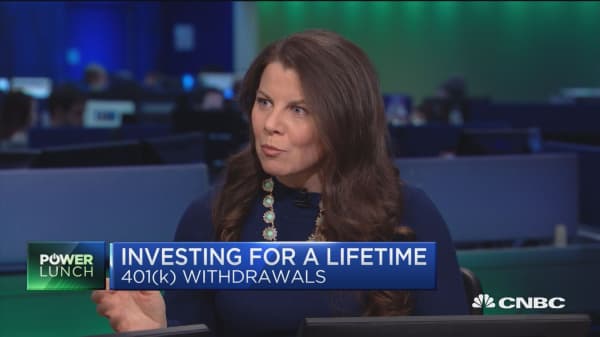
show chapters Investing for a Lifetime: Planning in your 70s Investing for a Lifetime: Planning in your 70s    3:17 PM ET Fri, 11 Jan 2019 | 04:30

"We see an increase in spending as people prepare for or transition into retirement," said Katherine Roy, chief retirement strategist at J.P. Morgan. "That surge or volatility is much greater than we had thought."

And those behaviors could upend traditional savings rules, according to J.P. Morgan's research.

Your calculations of what you will spend may be flawed

Chances are, as you age you will not spend as much money.

But as you project certain constants — such as your weekly grocery bill — you may not have the most accurate calculations.

That is because you likely will not buy the same items as your needs change. What's more, inflation will play a big part in how much you have to spend.

That makes it more likely that your estimates could be off.

Sign Up for Our Newsletter Your Wealth Weekly advice on managing your money SIGN UP NOW Get this delivered to your inbox, and more info about about our products and services.
By signing up for newsletters, you are agreeing to our Terms of Use and Privacy Policy. .investigation-wrapper .description{ text-align:center; padding-bottom:15px; } .nl-privacy{ font-size: 10px; padding-top: 20px; display:block; } .wildcard .investigation-wrapper { -webkit-box-shadow: 0px 0px 4px 0px #999999; /* Android 2.3+, iOS 4.0.2-4.2, Safari 3-4 */ box-shadow: 5px 5px 5px 0px #999989; } .subsection .investigation{ background: #efefef; border-radius: 3px; padding: 10px 20px 20px 20px; } .investigation small{white-space:normal;} .subsection .investigation h1{ text-transform: uppercase; text-align: center; font-family: "Gotham Narrow Ssm 5r"; margin-bottom: 0px; padding-bottom:0px; font-size: 18px; margin-top: 10px; word-spacing: 1.5px; color: #333333; } .subsection .investigation .headline_title { font-size: 28px; padding-top: 20px; display: block; font-family: "Gotham Narrow Ssm 7r"; padding-bottom:5px; } .subsection .email-info { background: rgba(74, 144, 226, 1); max-width: 140px; margin: 0px auto; text-align: center; padding: 6px 1px; color: #fff; border-radius: 5px; } .subsection .email-info { color:#fff; } .subsection .email-info:hover{ background: #2077B6; } body .subsection.investigation-wrapper{overflow:visible;}

As a result, you could wrongly estimate the effects of inflation on your future spending needs.

That could lead you to make the wrong retirement decisions when it comes to whether to keep working, put off spending or invest too aggressively in equities.

A better solution, according to J.P. Morgan, would be to consider your changing needs and inflation on a category-by-category basis, such as for food, housing, transportation and travel.

You'll likely spend more at the start of retirement

Once you reach retirement, you probably expect to seamlessly transition to a steady retirement spending plan.

Yet J.P. Morgan's research finds that's often exactly the opposite of what happens — in the beginning of retirement, at least.

That is because many retirees use that time to adjust to their new life phase. And that means plenty of spending — on travel, home renovations and other lifestyle changes.

More from Fixed Income Strategies:
Now may be the time to use bonds in portfolios
4 Social Security-claiming strategies for bigger benefits
6 fields that may be a great fit for a retirement gig

"It's really getting used to this new transition and new life stage. It's going to cause spending on categories you might not anticipate," Roy said.

Consequently, your withdrawal strategies should anticipate that you may spend more early on.

Because of that, you should be careful as to how much equity risk you take on early in retirement so that you do not deplete your savings. You also need to be aware of the tax consequences of the withdrawals you do make.

Keep in mind, too, that your spending will continue to fluctuate from year to year throughout your retirement. That is because your financial needs may change as your medical bills increase or an unexpected car or tax bill crops up.

Monday, March 4, 2019

BP Capital Fund Advisors LLC Takes $651,000 Position in Tellurian Inc (TELL)

BP Capital Fund Advisors LLC purchased a new position in Tellurian Inc (NASDAQ:TELL) in the fourth quarter, according to its most recent 13F filing with the Securities and Exchange Commission (SEC). The firm purchased 93,725 shares of the oil and gas producer’s stock, valued at approximately $651,000.

A number of other large investors also recently bought and sold shares of the business. PNC Financial Services Group Inc. grew its holdings in shares of Tellurian by 280.0% during the fourth quarter. PNC Financial Services Group Inc. now owns 3,800 shares of the oil and gas producer’s stock valued at $27,000 after buying an additional 2,800 shares during the last quarter. GWM Advisors LLC acquired a new position in shares of Tellurian during the fourth quarter valued at about $79,000. Fox Run Management L.L.C. acquired a new position in shares of Tellurian during the fourth quarter valued at about $123,000. LPL Financial LLC grew its holdings in shares of Tellurian by 148.7% during the fourth quarter. LPL Financial LLC now owns 31,528 shares of the oil and gas producer’s stock valued at $219,000 after buying an additional 18,850 shares during the last quarter. Finally, California Public Employees Retirement System grew its holdings in shares of Tellurian by 27.1% during the second quarter. California Public Employees Retirement System now owns 41,083 shares of the oil and gas producer’s stock valued at $342,000 after buying an additional 8,758 shares during the last quarter. Institutional investors and hedge funds own 19.62% of the company’s stock.

Get Tellurian alerts:

Shares of TELL traded down $0.28 during trading hours on Friday, reaching $9.98. 31,685 shares of the stock traded hands, compared to its average volume of 1,912,625. The company has a debt-to-equity ratio of 0.17, a current ratio of 4.61 and a quick ratio of 4.61. Tellurian Inc has a 52 week low of $5.90 and a 52 week high of $12.45. The firm has a market capitalization of $2.42 billion, a P/E ratio of -11.90 and a beta of 2.01.

In other news, Director Don A. Turkleson purchased 83,897 shares of the company’s stock in a transaction that occurred on Tuesday, December 11th. The shares were bought at an average cost of $6.75 per share, with a total value of $566,304.75. Following the completion of the transaction, the director now directly owns 126,121 shares of the company’s stock, valued at $851,316.75. The acquisition was disclosed in a legal filing with the Securities & Exchange Commission, which is available at this hyperlink. Also, Director Don A. Turkleson purchased 42,320 shares of the company’s stock in a transaction that occurred on Monday, December 17th. The shares were purchased at an average cost of $6.75 per share, for a total transaction of $285,660.00. Following the completion of the transaction, the director now directly owns 172,224 shares of the company’s stock, valued at $1,162,512. The disclosure for this purchase can be found here. Insiders have purchased 130,000 shares of company stock worth $877,500 over the last three months. 44.80% of the stock is owned by insiders.

TELL has been the subject of a number of analyst reports. Zacks Investment Research cut shares of Tellurian from a “hold” rating to a “sell” rating in a report on Thursday, February 21st. Scotiabank initiated coverage on shares of Tellurian in a report on Friday, February 8th. They set a “sector perform” rating for the company. Credit Suisse Group reduced their price objective on shares of Tellurian from $15.00 to $12.00 and set an “outperform” rating for the company in a report on Wednesday, November 14th. BidaskClub upgraded shares of Tellurian from a “hold” rating to a “buy” rating in a report on Wednesday, January 9th. Finally, Wolfe Research initiated coverage on shares of Tellurian in a report on Tuesday, November 13th. They set a “market perform” rating for the company. One analyst has rated the stock with a sell rating, four have given a hold rating, five have given a buy rating and one has issued a strong buy rating to the stock. The stock presently has an average rating of “Buy” and an average target price of $12.13.

ILLEGAL ACTIVITY NOTICE: This news story was first posted by Ticker Report and is the sole property of of Ticker Report. If you are reading this news story on another publication, it was illegally copied and reposted in violation of United States & international trademark and copyright laws. The legal version of this news story can be viewed at https://www.tickerreport.com/banking-finance/4189706/bp-capital-fund-advisors-llc-takes-651000-position-in-tellurian-inc-tell.html.

About Tellurian

Tellurian Inc plans to develop, own, and operate a natural gas business and to deliver natural gas to customers worldwide. The company is developing a portfolio of natural gas production, liquefied natural gas (LNG) trading, and infrastructure that includes an approximately 27.6 million tons per annum LNG export facility and an associated pipeline.

Featured Story: How Important is Technical Analysis of Stocks

Want to see what other hedge funds are holding TELL? Visit HoldingsChannel.com to get the latest 13F filings and insider trades for Tellurian Inc (NASDAQ:TELL).

Institutional Ownership by Quarter for Tellurian (NASDAQ:TELL)

Sunday, March 3, 2019

Better Buy: Enbridge vs. Enterprise Products Partners

Enbridge (NYSE:ENB) and Enterprise Products Partners (NYSE:EPD) are among the largest midstream players in North America. Although they hail from different countries, if you've looked at the high-yield midstream energy space, these two and their roughly 6% yields have probably popped onto your radar screen. Despite their numerous similarities, there are a few key differences that will help you decide which one is a better buy for you. Here's what you need to know.

The similarities

With a roughly $75 billion market cap, Enbridge is a bit larger than $60 billion market cap Enterprise, which is structured as a master limited partnership. However, both rank among the largest energy companies in North America, in addition to being two of the biggest in the midstream sector. They each have assets spanning across Canada and the United States. And their businesses are largely backed by regulated assets and long-term contracts.

The word yield spelled out with dice sitting atop stacks of coins

Image source: Getty Images.

There are some differences in the assets themselves, however. For example, Enterprise's portfolio includes pipelines, storage, export facilities, processing plants, and a fleet of boats. It's more focused on oil, natural gas, and the products into which they are turned. Enbridge's portfolio includes similar energy infrastructure, but also contains a utility business. That adds a level of diversification, though it pulls the company a little outside of the midstream space. That's not necessarily good or bad in itself, but it does mean that Enbridge isn't as pure a play on midstream as Enterprise, if that's important to you.

Each company has also done an excellent job of rewarding investors over time. Enbridge has the longer streak of annual dividend hikes, with 22 years of consecutive increases under its belt, and Enterprise is close behind with 21 years of distribution hikes. However, this is where some key differences start to show up. 

The important disparities

Over the past decade, Enbridge's dividend has grown at a compound annual rate of roughly 12%. The fact that that's around four times the historical rate of inflation growth ensures that the buying power of investor dividends grows robustly over time. Enterprise's distribution increased by a little less than 6% over the past decade, a notably slower pace. Although both midstream giants kept investors ahead of inflation, Enbridge's numbers here are clearly better.   

ENB Dividend Per Share (Quarterly) Chart

ENB Dividend Per Share (Quarterly) data by YCharts.

That said, the future is likely to be a little different. For example, Enterprise is currently working to shift its business model so that it will self-fund more of its growth spending (which will minimize the number of dilutive units it has to sell to raise capital). That's pushing its distribution growth rate down to roughly the inflation rate for a couple of years (and also has the effect of lowering its historical averages). After this transition is done, which should happen by 2020, distribution growth is likely to tick back up to the mid single digits. Enbridge, which recently completed buying a number of controlled businesses, is looking for distribution growth of roughly 10% a year through 2020, after which it believes dividend will grow around 5% to 7% a year. It expects to self-fund much of that growth. 

Neither of these projections includes major acquisitions, which could result in a large one-time distribution boost. But the basic idea is that Enbridge will be a far more rewarding dividend-growth investment for a couple of years and then be roughly on par with Enterprise. That would give it the edge if all other things were equal -- but they aren't.

ENB Financial Debt to EBITDA (TTM) Chart

ENB Financial Debt to EBITDA (TTM) data by YCharts.

Enbridge's debt-to-EBITDA ratio is roughly 6.7, more than twice Enterprise's ratio of 3. Enbridge has historically made greater use of leverage than Enterprise, which increases financial risk. The higher distribution growth rate has, basically, come with a cost. So far Enbridge has managed that risk well, but for conservative investors, Enterprise and its lower leverage might start looking a little more enticing at this point.

What to do?

In the end, both Enterprise and Enbridge are large and well-run midstream players. They each have robust yields that are supported by long histories of distribution growth. Enbridge will likely provide more dividend growth for a couple of years before settling down into the mid single digits, but it has more leverage. Enterprise's distribution will be a little less rewarding for a couple of years as it makes a conservative change to its business model. And then distribution growth should get back to its historical mid-single-digit range. That said, the company has a history of being very conservative with its finances, which some will see as a big plus.

If you prefer a more conservative approach to investing, you should probably err on the side of caution and go with Enterprise. However, if you don't mind paying a little more attention to your investments, and can get comfortable with the company's more aggressive use of leverage, then Enbridge is likely to be the better option. Neither, however, is likely to be a bad choice.

Saturday, March 2, 2019

Eagle Asset Management Inc. Cuts Stake in Blueprint Medicines Corp (BPMC)

Eagle Asset Management Inc. decreased its holdings in Blueprint Medicines Corp (NASDAQ:BPMC) by 2.2% in the fourth quarter, according to its most recent 13F filing with the SEC. The institutional investor owned 761,269 shares of the biotechnology company’s stock after selling 17,414 shares during the period. Eagle Asset Management Inc.’s holdings in Blueprint Medicines were worth $41,040,000 as of its most recent SEC filing.

Several other institutional investors have also made changes to their positions in BPMC. Russell Investments Group Ltd. boosted its stake in shares of Blueprint Medicines by 26.6% in the 3rd quarter. Russell Investments Group Ltd. now owns 26,253 shares of the biotechnology company’s stock valued at $2,049,000 after purchasing an additional 5,520 shares in the last quarter. Public Employees Retirement Association of Colorado boosted its stake in shares of Blueprint Medicines by 56.7% in the 3rd quarter. Public Employees Retirement Association of Colorado now owns 4,718 shares of the biotechnology company’s stock valued at $368,000 after purchasing an additional 1,708 shares in the last quarter. Victory Capital Management Inc. boosted its position in Blueprint Medicines by 3.4% during the 3rd quarter. Victory Capital Management Inc. now owns 454,562 shares of the biotechnology company’s stock valued at $35,482,000 after buying an additional 15,080 shares during the period. Comerica Bank purchased a new stake in Blueprint Medicines during the 3rd quarter valued at $729,000. Finally, Wells Fargo & Company MN boosted its position in Blueprint Medicines by 65.1% during the 3rd quarter. Wells Fargo & Company MN now owns 32,718 shares of the biotechnology company’s stock valued at $2,554,000 after buying an additional 12,903 shares during the period. 99.99% of the stock is owned by institutional investors.

Get Blueprint Medicines alerts:

BPMC has been the subject of several analyst reports. Zacks Investment Research cut shares of Blueprint Medicines from a “hold” rating to a “sell” rating in a research report on Friday, November 2nd. BidaskClub cut shares of Blueprint Medicines from a “hold” rating to a “sell” rating in a research report on Tuesday, November 13th. Cowen reissued a “buy” rating on shares of Blueprint Medicines in a research report on Thursday, November 15th. ValuEngine cut shares of Blueprint Medicines from a “strong-buy” rating to a “buy” rating in a research report on Wednesday, January 2nd. Finally, Wedbush reissued an “outperform” rating and set a $103.00 price target on shares of Blueprint Medicines in a research report on Monday, January 7th. One analyst has rated the stock with a sell rating, six have assigned a buy rating and one has issued a strong buy rating to the company. The stock has a consensus rating of “Buy” and an average target price of $103.25.

Shares of BPMC opened at $82.19 on Friday. The firm has a market cap of $3.43 billion, a price-to-earnings ratio of -20.97 and a beta of 1.61. The company has a debt-to-equity ratio of 0.03, a current ratio of 10.05 and a quick ratio of 10.05. Blueprint Medicines Corp has a twelve month low of $44.58 and a twelve month high of $109.00.

Blueprint Medicines (NASDAQ:BPMC) last announced its quarterly earnings results on Tuesday, February 26th. The biotechnology company reported ($1.83) earnings per share for the quarter, missing the Thomson Reuters’ consensus estimate of ($1.76) by ($0.07). The firm had revenue of $1.03 million for the quarter, compared to analysts’ expectations of $1.77 million. Blueprint Medicines had a negative net margin of 455.15% and a negative return on equity of 36.72%. The company’s quarterly revenue was down 36.7% on a year-over-year basis. During the same period in the previous year, the company earned ($1.23) EPS. As a group, equities research analysts forecast that Blueprint Medicines Corp will post -5.35 EPS for the current fiscal year.

WARNING: “Eagle Asset Management Inc. Cuts Stake in Blueprint Medicines Corp (BPMC)” was posted by Ticker Report and is owned by of Ticker Report. If you are viewing this story on another publication, it was stolen and reposted in violation of US & international trademark and copyright laws. The correct version of this story can be read at https://www.tickerreport.com/banking-finance/4188921/eagle-asset-management-inc-cuts-stake-in-blueprint-medicines-corp-bpmc.html.

About Blueprint Medicines

Blueprint Medicines Corporation, a biopharmaceutical company, develops drugs of small molecule kinase inhibitors that target genomic drivers in various cancers and a rare genetic disease. Its lead drug candidates include avapritinib, which is in Phase I clinical trials that targets KIT Exon 17 mutant proteins and PDGFRa D842V mutations, that are drivers of cancer and proliferative disorders, including gastrointestinal stromal tumors and systemic mastocytosis; and BLU-554, which is in Phase I clinical trials an orally available, potent, and irreversible inhibitor of the kinase FGFR4 that is activated in a defined subset of patients with hepatocellular carcinoma.

Recommended Story: Average Daily Trade Volume – ADTV

Want to see what other hedge funds are holding BPMC? Visit HoldingsChannel.com to get the latest 13F filings and insider trades for Blueprint Medicines Corp (NASDAQ:BPMC).

Institutional Ownership by Quarter for Blueprint Medicines (NASDAQ:BPMC)

Friday, March 1, 2019

Dean Foods Co (DF) Q4 2018 Earnings Conference Call Transcript

 Logo of jester cap with thought bubble.

Image source: The Motley Fool.

Dean Foods Co  (NYSE:DF)Q4 2018 Earnings Conference CallFeb. 27, 2019, 9:00 a.m. ET

Contents: Prepared Remarks Questions and Answers Call Participants Prepared Remarks:

Operator

Good morning and welcome to the Dean Foods Company Fourth Quarter and Full Year 2018 Earnings Conference Call. Please note that today's call is being recorded and is also being broadcast live over the Internet on the Dean Foods' corporate website. This broadcast is the property of Dean Foods. Any redistribution, retransmission or rebroadcast of this call in any form without express written consent of the Company is strictly prohibited.

At this time I would like to turn the call over for opening remarks to the Vice President Investor Relations and External Communications, Ms. Suzanne Rosenberg. Please go ahead.

Suzanne Rosenberg -- VP, Investor Relations & External Communications

Thank you Gigi and welcome everyone. Thanks for joining us on our fourth quarter and full year 2018 conference call. This morning we issued a press release, which is available along with a slide presentation in the Investor Relations section of our website at deanfoods.com. A replay of today's call will be available on our website beginning this afternoon. Before we begin, we would like to advise you that all forward-looking statements made on today's call are intended to fall within the safe harbor provisions of the Private Securities Litigation Reform Act of 1995. These statements are based on current expectations and projections and involve risks and uncertainties that may cause actual results to differ materially from our forward-looking statements. Information concerning those risks is contained in the Company's filings with the SEC.

In addition we will be discussing operating and financial results on an adjusted basis. A reconciliation of these non-GAAP measures referenced during today's discussion to their most direct comparable GAAP measures can be found in today's press release on our website. Participating with me on today's call are Ralph Scozzafava our Chief Executive Officer; and Jody Macedonio our Chief Financial Officer. Ralph will start us off with an overview of our strategic plan that we are executing in 2019 and a review of our fourth quarter and full year performance. Jody will then offer some additional perspective on our financial results before turning the call back over to Ralph for comments on the forward outlook and closing remarks. We will then open the call to your questions.

With that I will now turn the call over to Ralph for his opening remarks. Ralph?

Ralph P. Scozzafava -- Chief Executive Officer

Thank you Suzanne and good morning. As everyone knows there has been a significant amount of change happening in the marketplace and we must adapt accordingly. Here at Dean Foods, we remain laser focused on our strategic plan and its key initiatives to drive improved business performance in 2019 and beyond. As a reminder, our strategic plan and its five pillars are the roadmap that we use to drive our business and our Company moving forward. These pillars include: winning in private label; building and buying strong brands; driving operational excellence; enhancing our future capabilities; and transforming the way that we go to market.

Today Jody and I will frame our discussion around these pillars with the imperatives that are most critical for 2019. Yesterday after the market closed, we announced that as we seek to accelerate our business transformation and enhance shareholder value the Board has initiated a review of a range of potential strategic alternatives to best position the Company for the future. To provide additional financial flexibility as we work to achieve our transformation goals, we also announced that we have successfully refinanced our credit facilities and also suspended payment of our dividend. I'll speak more about all of these items at the end of the call.

Now turning to our imperatives for 2019. First we're executing on the commercial agenda of our plan, which includes winning in private label and building and buying strong brands. To win in the private label piece of the business we must be the low-cost provider and also transform the way we go to market. We have an expansive footprint of plant locations that enable us to process our products very close to our customers and ultimately to our end consumers across most of the U.S. and we utilize our powerful direct-store delivery capability to deliver our fresh high-quality products from farm to table very effectively. Our private label customers, they know that Dean gives them the very best the industry has to offer and we know that we have to bring a strong, quality, value and service package to the marketplace to earn that business every day. This enables us to continue building and buying strong brands like DairyPure and like TruMoo and introducing more innovative new products to enhance and diversify our portfolio.

Secondly we continue to take an aggressive approach to delivering operational excellence, where we're executing the second phase of our enterprisewide cost productivity plan. This plan will continue to generate meaningful incremental savings as we integrate our operating model and rightsize our cost structure. And finally building our capabilities by making tangible improvements and investments in our people, technology and infrastructure that will allow us to be more efficient and effective in our execution. In short, we're taking bold steps and meaningful actions in 2019 to drive our strategic plan forward and transform our Company to more effectively compete and win in today's landscape.

So, with that let's recap last year. For the fourth quarter we reported an adjusted operating loss of $46 million and an adjusted loss of $0.50 per share both significantly down versus year ago. On a full year basis. We reported $1 million of adjusted operating income and an adjusted loss of $0.47 per share. Our financial results reflect the number of challenges that we and our industry experienced in 2018. including a rapidly changing landscape and a very dynamic retail environment.

In terms of volume the overall fluid milk category continued to post declines of roughly 2% year-over-year according to the USDA. One key driver of the change in our 2018 results versus prior year was the anticipated customer volume exiting our system, beginning in the second quarter. Another cause was the higher than anticipated transitory costs associated with the very large plant consolidation exercise we implemented at the end of the third quarter, where we closed seven plants in a six-week period and consolidated that volume into numerous receiving plant locations. The bulk of the higher transitory costs came from only a handful of these plants, which were far more complex and we have since added resources to these locations to help accelerate improvement.

In addition a portion of the transitory costs were related to the seasonality of the business as we made sure to prioritize service to our customers above all else and deliver the highest quality level of service and delivery standards during the very important peak holiday season. In addition similar to what other CPG companies have been experiencing lately margins continue to be impacted by inflationary pressures from higher fuel and freight costs as well as a very tight labor market particularly as it relates to our drivers. Despite the significant progress we made in executing our enterprisewide cost productivity plan, the cost savings that we drove were mitigated by the incremental transitory cost putting significant pressure on our operating results in 2018.

To help offset this escalating cost environment, we are continuing to address our cost base and have also executed certain pricing initiatives effective in the first quarter of 2019. Despite these challenges we continue to generate positive free cash flow from operations in 2018. Importantly as we execute our plan, we continue to transition from a decentralized holding company model into an integrated low-cost operating company structure, rightsized to the business that we have today. While all the results of this work are not yet reading through the P&L we're very confident we're taking the right actions to position the business for the long term.

So now let's turn to the commercial agenda of our plan. As I mentioned, we're successfully executing on our commercial plans. We operate in a large and essential category where milk is ranked as the fifth largest edible category in the food and beverage industry. We have a very balanced portfolio of products that enables us to participate in the growing private label business as well as drive a branded portfolio. We have solid opportunities to leverage both businesses. To that end, winning in private label is a primary objective for our Company. We have many advantages to leverage in our plant network and DSD capability, enable us to bring a strong combination of quality value and service to enable us to win in this important business. Building and buying strong brands is a crucial profit driver for our Company. Even as retailers continue to invest in private label, our big national brands DairyPure and TruMoo are number one in the markets that we serve and are at the core of building a strong portfolio of products in the dairy case.

On the frozen side of the business we see attractive category dynamics in ice cream and frozen novelties. We have a national ice cream platform with excellent growth potential and strong positions in both branded and private label. Importantly we're leveraging the breadth of our plant network, while hitting in high-growth segments like novelties and premium pint-sized products. Our portfolio of brands include Friendly's, Mayfield, Dean's and Steve's Ice Cream. With Steve's, we're introducing the brand to retailers with an appealing portfolio of super premium traditional dairy and non-dairy pint products. With our Friendly's brand we've launched the line of delicious sundae cups and cakes that have been very well received by retailers. We have solid commercial plans in place and we are executing them right now in the marketplace.

So with that I'll now turn the call over to Jody to update you on our enterprisewide cost productivity plan and review our financial performance in more detail. Jody?

Jody L. Macedonio -- Executive Vice President and Chief Financial Officer

Thank you Ralph. As many of you know our enterprisewide cost productivity plan is aimed at optimizing and transforming our Company. Key elements of the plan include rescaling our supply chain, optimizing spend management and integrating our operating model. Let's start with rescaling our supply chain. We experienced considerably higher-than-expected transitory costs related to our plant consolidation as we ramp up receiving locations and return to steady state. We've identified a handful of more complex locations where we have dedicated additional internal resources and have also deployed a third-party to accelerate process and performance improvement. Overall we are seeing some easing in transitory cost and we expect the plant consolidation savings to accelerate as we progress throughout the year. As we continue our transition from a holding company to an operating company, we're deploying broad-based efficiencies as it relates to our external spend. We have centralized management of our procurement team, enabling us to standardize our processes, leverage our buying power and optimize spending across all categories. We've augmented these efforts by deploying a best-in-class procure-to-pay system to fully leverage the benefits of our supplier arrangement. In addition, we are employing a new trade promotion management system to enhance returns on trade promotions for both our retail customers and Dean Foods.

In terms of the integration of our operating model, we are mid-flight in streamlining and centralizing our back office processes into a shared service model, which will provide us with a simpler, more cost-effective structure in 2019 and beyond. Lastly enhancing our capabilities enables our Company to be a leaner and more nimble organization that can readily meet the challenges in the current marketplace with a clear eye to the future.

Turning now to the P& L. In the fourth quarter total Dean Foods volume was down significantly year-over-year, reflecting the loss of certain customers exiting our system and an overall category decline. Through December we saw a quarter-to-date fluid milk category decline of 2.1% in USDA results. In measured channels, IRI data shows the conventional light milk category decline of 4.1% in the fourth quarter with higher levels of decline in large format drug and convenience stores being slightly offset by growth in the dollar channel. Full year 2018 adjusted gross profit was $1.7 billion. For Q4 we reported $384 million in adjusted gross profit, a decline of 14% versus prior year, driven primarily by lower volumes and higher-than-expected transitory costs related to our plant closures.

As a reminder, transitory costs include incremental product shrink, labor and freight, which resulted from our accelerated plant consolidation that began at the end of the third quarter. As Ralph mentioned, we're aggressively addressing these costs and have deployed additional resources to augment our efforts in a more complex facility. Below the gross profit line, total Company operating expenses increased by $33 million in Q4 and $14 million for the full year as compared to the year-ago period. Within selling and distribution, the cost versus prior year increased $34 million in the fourth quarter and $51 million for the full year, primarily due to transitory costs associated with the plant closures and higher fuel and freight inflation as well as investments in advertising. Full year 2018 G&A costs improved $28 million versus 2017 driven by our focused efforts to reduce headcount and employee-related expenses as part of our enterprisewide cost productivity program.

As a result of all of these factors the adjusted operating loss for Q4 was $46 million. Full-year 2018 adjusted operating income was $1 million. Below the operating income line, adjusted EBITDA for the quarter was a loss on $14 million. Adjusted EBITDA for the full year was $136 million. Adjusted interest expense for the full fourth quarter was roughly flat versus year ago and down $7 million or 12% for the full year versus year ago. Q4 adjusted loss per share was $0.50 and full year adjusted loss per share was $0.47. Before we move on, I'd like to point out that in the fourth quarter we recorded a non-cash goodwill impairment charge off $191 million, which is reflected in our financial results on a GAAP basis that has been eliminated for our adjusted results for comparison purposes.

The impairment charge resulted from our annual assessment of the carrying value of our business compared to its fair value based on our current projected cash flows, the overall category evolution and other comparable companies in our category. This non-cash charge had no impact to our operations or our cash flows. In Q4 , raw milk costs were up 6% sequentially versus Q3 and down 6% versus year ago. As we look to the remainder of 2019, the USDA continues to forecast the supply increase by approximately 1% versus 2018. We've project Class I raw milk cost inflation in Q1 of nearly 8% versus prior year and expect full year dairy commodity inflation. With retailers continuing to invest in private label pricing, we've seen a decrease in retailer margin over milk with fourth quarter's rate at $1.34 comparable to $1.36 in the third quarter. Keep in mind any change in raw milk costs will predominantly impact our branded business.

Turning now to free cash flow. While we're not pleased with our operating performance in 2018, we did generate full year free cash flow of $38 million, which was flat versus last year. Net working capital for Q4 2018 was $120 million lower compared to Q4 2017. This improvement was driven by better working capital management, lower volume and dairy commodity prices. Full-year capital expenditures of $115 million were in line with our expectations and reflect a significant investment in our enterprisewide cost productivity program.

In February, we successfully completed a refinancing of our debt capital structure, reflecting flexible low-cost and multi-year revolving facilities. This is achieved by amending and extending our $450 million AR securitization facility for another three years with maturity date of February 2022. We also entered into a new five-year $265 million revolving credit facility secured by real estate and other assets. The revolving facilities are anchored by the $700 million and 6.5% fixed rate senior unsecured notes issued in 2015 and due in 2023.

This combined $715 million in revolving facilities is rightsize from what we had in place prior to closing and gives us cost-conducive borrowing capabilities. We're very pleased that we have significantly increased accessible liquidity, gained greater covenant flexibility and extended the Company's debt maturity profile. From a balance sheet perspective, we ended 2018 with $887 million of net debt, which was $15 million lower than prior year. This was driven by our positive free cash flow generation in 2018.

With that I will now turn the call back to Ralph for a brief commentary on our forward outlook and the recently announced strategic alternatives review. We'll then open the call to questions. Ralph?

Ralph P. Scozzafava -- Chief Executive Officer

Thanks Jody. As you have heard from our remarks today we are in an important period of transition and transformation for Dean Foods. We're working diligently across our Company to execute our major priorities of driving our commercial agenda, implementing our enterprisewide cost productivity plan and building on our core capabilities. Before I turn the call over to Q&A, I'd like to briefly discuss the strategic alternatives review, financial guidance and our dividend.

Yesterday we announced that the Company has initiated a review to explore and evaluate a range of potential strategic alternatives to enhance shareholder value. As we focus on ways to accelerate our business transformation, we recognize that there may be opportunities to unlock significant unrealized value in the Company. I know I speak on behalf of the entire management team when I say that we are and remain fully committed to executing on our strategic plan, while this review is under way. We have not established a definitive timeline to complete our review and no decision on any particular alternative has been reached. There can be no assurance that this review will result in any agreement or transaction and we do not intend to discuss or disclose developments with respect to the Board's process unless and until we determine the specific course of action or it's otherwise necessary.

Now in our earnings release today, we also announced the Company had suspended financial guidance. We concluded that this was a prudent action to take as we continue to focus on ways to accelerate the execution of our transformation plan and simultaneously evaluate a range of other strategic alternatives. This decision in no way diminishes our commitment to moving quickly to enhance our performance or our confidence in our long-term prospects.

Now regarding our dividend as I've mentioned earlier we suspended payment of a quarterly cash dividend. This will enable us to allocate additional financial resources toward the execution of our transformation plan, which we think is prudent and in the best interest of all stakeholders. Importantly as Jody mentioned we've enhanced the composition of our capital structure with the execution of our credit facility refinancing. We now have a capital structure that's more appropriate for a company of our size and industry position and gives us the flexibility to fund both operational and strategic objectives.

As one of America's largest dairy providers with our domestic manufacturing plant footprint and large DSD network, along with our national brands and strong private label capability, we have a solid foundation to drive improved financial and operational results. Complemented by our transformation strategy we're reshaping ourselves into a company that will be more competitive lean and agile. Our primary focus is and will continue to be providing our customers and consumers with the brands and products that they love and the same great quality and excellent service that they have come to expect from us.

So with that let's open up the call to your questions. Operator?

Questions and Answers:

Operator

(Operator Instructions) Our first question is from Judy Hong from Goldman Sachs.

Judy Hong -- Goldman Sachs & Co. -- Analyst

Thank you, good morning everyone. So Ralph I guess I understand you may not be in position to give us a bit more details about the strategic alternatives, but I think the range of options that you've laid out is pretty wide. So -- and I guess from a timing standpoint just given that challenges that you faced with the EBITDA decline, I think from an outsider's view it's also hard to find options that they may actually create a lot of value. So, just help us understand sort of the timing and then when you think about some of the range of options are we looking at more like an asset sale? Or is this much more of our broader, just in terms of how you think about the business structure or even thinking about that maybe separating the private label versus the brand with (inaudible) businesses?

Ralph P. Scozzafava -- Chief Executive Officer

Thanks Judy. I think let me just handle the timeline piece first. We are in no hurry to do anything. I think the most important thing that we can think about is where is unlocked potential in this Company and what are the options that would help maximize and optimize that. To include continuing to execute the plan that we have today. So, we're not going to put any kind of time frame on it. What we wanted to do with this announcement is make sure that we looked at all potential ideas, ideas we have and others might have. And I think within those, we'll see something that will or won't be more impactful than what we're doing today. I think the message for anyone and everyone listening is we will take the appropriate amount of time. Our Board will be very thoughtful and considerate and we'll make a prudent decision one way or another at the appropriate time. So we're still very early in this endeavor.

Operator

Our next question is from Ken Goldman from JPMorgan.

Ken Goldman -- JPMorgan -- Analyst

I joined a little bit late so forgive me if this was addressed. But I'm just curious if you could describe a little bit of the process that led you to launch or endeavor into this strategic review? In other words why now? Dean's obviously had some good stuff and some challenges over the last few years. And I'm just trying to get a sense of at what point was there sort of a straw that broke the camel's back that made you say, all right now we need to sort of go in different direction?

Ralph P. Scozzafava -- Chief Executive Officer

Yes I think the first thing to think about is it's not new. One of our primary objectives here and the primary objective is to drive shareholder value. And Ken as you know every so often we sit down with the Board and we think about corporate strategy and what makes the most sense for us from business perspective as an organization and more broadly. And we think that this is a good time for us to think about what else is out there. We are in the middle of a very important period of transition and transformation.

We've got a lot of things that we're doing that are going to make us more competitive, leaner, more agile. We've got a strong commercial agenda and a lot of capabilities. So at this point, we thought let's have some discussions and we'll see what might be out there to help us maybe accelerate our transformation. And in doing so we're going to be very transparent about it as we have. We made an announcement and now we'll go ahead on a path. So we'll see where it takes us.

Operator

Our next question is from Akshay Jagdale from Jefferies.

Akshay Jagdale -- Jefferies -- Analyst

Thanks for the question. So Ralph I mean suspending the dividend in conjunction with what we know is a really good cash flow generation capability at Dean Foods, combined with suspending guidance. I mean it just sounds like to me you feel like you could do better job with this transformation if you were private right? I mean are you basically -- by suspending the dividend etcetera I mean are you basically just increasing the flexibility and the options? Or how do we think about that, right, if you can give some context on that? And then on the operational side I mean can you talk about the cost structure having an impact on some of the private label bids? I mean have you made any progress on share gains on private label because that was part of the story. And now that you've addressed the cost structure I mean where are we on that? Thank you.

Ralph P. Scozzafava -- Chief Executive Officer

Sure. Actually let me maybe start it at the beginning. I think I'll start with a dividend. I know that's a question others may have. Look I think one of the most important priorities that we have as a management team, our Board has is allocating resources. And whether that's people, money, we think that the best allocation of our resources both our capital and our intellectual capital is against our transformational plan. And we think that's what's in their best interest of all shareholders. We think that is the best use and message frankly to our organization around the use of our resources. So we're going to continue to drive everything, all energy against the transformation plan. So that's really the first thing.

In terms of guidance, honestly we're going to be evaluating a lot of alternatives and we really think that there are some changes depending on some of the things that we and the Board will decide over the next few months that may change the pace and magnitude of some of the things that we do. We just went through a period where we consolidated seven plants in a six-week period that was I think a very necessary and bold move and I think that we'll ultimately benefit greatly from it. That is an important decision. So we may decide to do some things faster or slower. And we thought to give guidance at this point in time isn't prudent given everything that we're trying to do.

Last part of your question around the cost structure and we've been really clear about it. If you really want to win in private label which is important to us you need to be a low-cost provider. And everything that Jody talked about that our team is doing is to make us more efficient, more effective, at winning those bids doing it in the right way and also being able to unleash our brands at the same time. So yes I think that we're making progress in getting our cost structure down. The transitory costs in Q4 really offset and mitigated a lot of the good work that we're doing. Those bubble cost will come out and when they do, I think we're going to find ourselves in a pretty darn competitive position.

Operator

Our next question is from John Baumgartner from Wells Fargo.

John Joseph Baumgartner -- Wells Fargo Securities -- Analyst

Good morning, thanks for the question.

Ralph P. Scozzafava -- Chief Executive Officer

Good morning John.

John Joseph Baumgartner -- Wells Fargo Securities -- Analyst

Ralph when you look at the Company's valuation, I guess I wanted to argue that that's fair value for a commodity business in structural decline. But if you flip that, I guess, one could you also may argue that the market right here is kind of undervaluing the optionality and the value of milk fat. And when you think about that strategic review and the comments about potential JVs or a sale, how do you think about the magnitude of an investment or complexity that would exist for a strategic JV partner to kind of come in, unlock that value? Or even the amount of capital that a financial buyer would need to maybe inject because it feels that ever since the Morningstar divestiture, Dean's have kind of building monetize its milk fat stream and the value added is kind of limited.

Ralph P. Scozzafava -- Chief Executive Officer

Let me talk to that, I think you're getting into some really important dairy math which I think is pertinent right. I think our ice cream business helps us unlock some of that. We think it's a great platform for us and we think that there is growth potential in that business. So to the degree that we can utilize a lot of that byproduct ourselves and sell it at retail versus wholesale is important. So there's a lot of optionality from that standpoint. But I go back to this John and I know you've been good about asking about this in the past, we've got this big footprint.

And we've got a footprint of plants that put us very, very close to the customer as it relates to fluid milk. The big DSD network, lots of folks have talked to us through the years and we have tremendous optionality around what else we could put on those trucks. And now with our enterprisewide cost productivity plan, we think we can get ourselves down to a cost structure that can make us very, very competitive. So, I like our balance sheet right now. I like the refinancing that was done. And I think with those ingredients we're going to choose the best path forward for the Company and that path may be to continue on our transformation plan and we're just fine with that too.

Operator

Thank you. Our next question is from Rob Dickerson from Deutsche Bank.

Matt Fishbein -- Deutsche Bank Securities -- Analyst

It's Matt Fishbein on for Rob. Thanks for the question.

Ralph P. Scozzafava -- Chief Executive Officer

Hi Matt.

Matt Fishbein -- Deutsche Bank Securities -- Analyst

For a long time Dean Foods has considered its HTST method of processing milk as a competitive advantage, given HTST's freshness better taste etcetera, relative of course to UHT processing which is the type of processing plant that Walmart just finished building and the type of processing that looks like Amazon is going to be used for its private label milk. Do you still consider your method of processing a competitive advantage? And what is HTST's share of the overall fluid milk market?

And what is the go-forward share trend look like from our perspective? Is it more expensive to process your milk around that distribution network as a primarily HTST processor? Is it fair to say that this and perhaps the market shift to UHD processing is part of the structural problem you're facing? And regarding your branded business and your other products, is there any way you can help us quantify the percentage of your customers that don't purchase private label milk from you, but do purchase branded products or your other non-fluid milk products? Just trying to understand how dependent the success of your branded and non-fluid milk strategy is on winning at private label? Thanks.

Ralph P. Scozzafava -- Chief Executive Officer

Sure Matt. Let me go back to HDSD versus extended shelf life. Most of the plants in the country, the vast majority are HTST which for those on the line they're not familiar with it. It's fresh milk. All right so fresh milk, you pasteurize, you homogenize and it's fresh. And the other is so much more cooked process. You can taste it in the milk and it's a very small part of the category on a relative basis. In fact the Walmart plant just to be clear is an HTST. So it's a fresh milk plant so are the vast majority of ours. Fresh milk is darn close to 90% of all the milk consumed in the category. It's extremely large. So that is where the business is.

And if you think about it from a consumer standpoint what are we hearing from consumers? We're hearing farm-to-table, we're hearing fresh, the more processed the worse it is. And what we've got basically is a very fresh offering and it's the highest quality milk out there and it's the lion's share by a long stretch of the category. So we don't think by any means that we're chasing some old technology and some old product line.

As far as the brands, we know that consumer insight work that we do has told us that there is a core set of consumers that want the highest quality milk for their families, for their kids and the whole notion of our product like DairyPure with five-point purity promise absolutely guarantees that highest quality product to bring home and share with the family. So we think the branded part of the business is absolutely important as well as winning in private label, which helps you unlock a lot of distribution.

I would tell you that the products we like to have them travel together because of their DSD network makes transporting both from a logistic standpoint much more effective and efficient. We do have some customers that are branded only for us. They understand they can get our premium on our brands, but we really like to do it all in our package. And I think it's best for the retailer too.

Operator

Thank you. (Operator Instructions) Our next question is from Amit Sharma from BMO Capital Markets.

Hi good morning everyone.

Good morning Amit. How are you?

Good thanks. Ralph two-part question; one on the potential strategic options. Can you talk about the strategic direction that the Company has taken in the last several years, collecting brands and then potentially moving outside of the fluid milk category as well with ice cream and the JV with Organic as well. Has that been as productive as you would have expected going into those? And is that on the table as well let's streamline ourselves, this diversification hasn't really delivered so maybe look to monetize on those assets? And then one for Jody. You talked about putting some more pricing in 1Q '19. I mean many other companies who are facing inflation in the non-dairy commodities have generally priced already. Are you delayed or is it just a structural issue that you will not be able to get pricing in line with inflation in a timely fashion?

Jody L. Macedonio -- Executive Vice President and Chief Financial Officer

Hi, I'll answer the pricing first. Thank you for the question. We are seeing the same types of inflationary pressures that other food and beverage companies have been talking about. And yes we did initiate a pricing action in January of this year and we're going to start seeing flow through our results in 2019. So I think it's important that like other CPG companies that we price as we should when we're seeing inflation in this escalating cost environment.

Ralph P. Scozzafava -- Chief Executive Officer

And Amit as far as it relates to diversification I think the thing that we all have to remind ourselves with of and we do at here is we have to have patience as well. We have such a huge core business in fluid milk that it really takes time and magnitude to build enough diversification around that business. Our ice cream business is an example. It's large-scale, we're in the top three or four producers in the United States and it's high volume. But when you compare it to the fifth-largest category, where we're by far number 1, it pales in comparison.

I can tell you from an earnings point of view, it does it punches -- our ice cream business punches above its weight. We like the growth potential. So, we just need sometime to develop these other categories and then perhaps as we go through a strategic alternatives process, there may be some ways to accelerate that diversification. And that's just one of the things that we're thinking about as we go down on this parallel path.

Operator

Thank you. Our last question is coming from the Pamela Kaufman with Morgan Stanley.

Rose Lauricella -- Morgan Stanley -- Analyst

This is Rose on for Pam. Thanks for the question.

Ralph P. Scozzafava -- Chief Executive Officer

Good morning.

Rose Lauricella -- Morgan Stanley -- Analyst

In the last 8-K that we saw last week, you listed about 10 plants that had been under closure that had been closed. So were there some additional plants closed relative to the seven you highlighted? And then can you confirm how many plants you have remaining in the business? And what your plans are for further plant closures?

Ralph P. Scozzafava -- Chief Executive Officer

Okay let me just start with some of the plants that you might have seen listed. There are some carve-outs that we did as it relates to collateral when we securitized the loans and the facilities that you saw us announce on Friday. So that's simply a listing of what's not in that collateral package.

Operator

Thank you. At this time I am showing no further questions. I would like to turn the call back over to Ralph Scozzafava for closing remarks.

Ralph P. Scozzafava -- Chief Executive Officer

All right great. Well listen thank you everyone. We appreciate you being on the call today. It's an important time for Dean Foods; transformation, transition and we are maniacally focused on executing our plan to deliver better improved financial performance and operating results. And our strategic alternatives process will begin and we will spend a lot of our time driving our business. So thank you for your interest and we'll see you all in the next call. Thank you.

Operator

Ladies and gentlemen thank you for your participation in today's conference. This concludes the program. You may now disconnect.

Duration: 41 minutes

Call participants:

Suzanne Rosenberg -- VP, Investor Relations & External Communications

Ralph P. Scozzafava -- Chief Executive Officer

Jody L. Macedonio -- Executive Vice President and Chief Financial Officer

Judy Hong -- Goldman Sachs & Co. -- Analyst

Ken Goldman -- JPMorgan -- Analyst

Akshay Jagdale -- Jefferies -- Analyst

John Joseph Baumgartner -- Wells Fargo Securities -- Analyst

Matt Fishbein -- Deutsche Bank Securities -- Analyst

Rose Lauricella -- Morgan Stanley -- Analyst

More DF analysis

Transcript powered by AlphaStreet

This article is a transcript of this conference call produced for The Motley Fool. While we strive for our Foolish Best, there may be errors, omissions, or inaccuracies in this transcript. As with all our articles, The Motley Fool does not assume any responsibility for your use of this content, and we strongly encourage you to do your own research, including listening to the call yourself and reading the company's SEC filings. Please see our Terms and Conditions for additional details, including our Obligatory Capitalized Disclaimers of Liability.